Bridging the gap between uncertainty and the stock market
In the pursuit of success, the journey from theoretical research to tangible solutions is often fraught with challenges.

Written by
Stock Region
Insight
May 12, 2026
4 min read
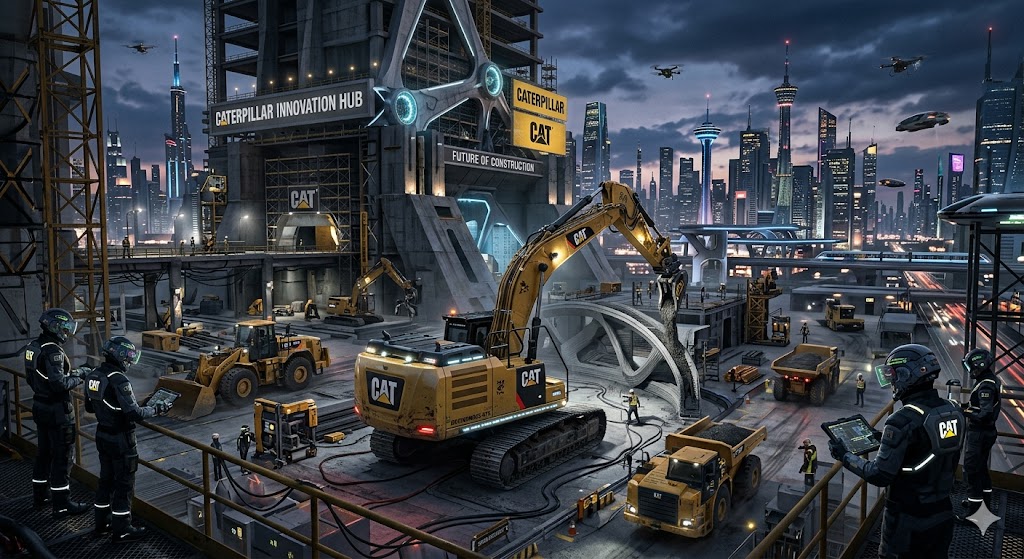
AI Infrastructure, Geopolitical Tremors, and the 2026 Equities Supercycle
Disclaimer: The investments, strategies, and market forecasts discussed in this exhaustive briefing may not be suitable for all investors. The material presented herein is strictly for informational and educational purposes and does not constitute tax, legal, insurance, or investment advice. Furthermore, this document is not a recommendation, offer, or solicitation to buy or sell any security, financial instrument, or digital asset. Past performance is not a reliable indicator of future results, and historic market trends cannot predict actual future market behavior. All investments involve a high degree of risk, including the risk of severe or total loss of principal. Trading with options, LEAPS, futures, and other derivative instruments is highly speculative and can lead to immediate and permanent financial loss. Online trading has inherent risks due to system responses and market volatility. It is unequivocally recommended that investors consult with a registered personal financial advisor before executing any transactions or investments based on this information.
The Macroeconomic Crucible: Navigating the 2026 Equities Landscape
The global financial markets in May 2026 stand at a precarious, historically unprecedented crossroads. The contemporary economic landscape is defined by a ruthless tug-of-war between contradictory forces: an euphoric, trillion-dollar artificial intelligence (AI) capital expenditure boom on one side, and a suffocating matrix of stubborn inflationary pressures, hawkish monetary policy, and catastrophic geopolitical supply chain shocks on the other. To accurately forecast the trajectory of individual equities—particularly in the industrial and technology sectors—one must first dissect the broader macroeconomic framework that is currently dictating the flow of institutional capital.
The consensus among elite financial institutions points toward an upward, albeit violently turbulent, trajectory for the S&P 500 Index through the remainder of 2026. However, this optimism is not born from broad-based, egalitarian economic expansion. Rather, it is the result of a hyper-concentrated explosion in corporate earnings tied exclusively to the technology sector and the industrial conglomerates tasked with building its physical infrastructure. First-quarter earnings for the S&P 500 tracked toward a staggering 29% year-over-year growth rate, fueled almost entirely by the "Magnificent Seven" megacap technology firms and their immediate beneficiaries.
Market strategists have aggressively revised their targets upward to reflect this top-heavy reality. HSBC Global Investment Research recently elevated its official year-end 2026 S&P 500 target to 7,650, increasing its earnings per share (EPS) estimates by 8% to forecast a massive 20% EPS growth rate, translating to $325 for the index. More aggressively bullish institutions, such as RBC Capital Markets and Yardeni Research, have pushed their targets to 7,900 and 8,250, respectively, citing robust corporate earnings that seemingly defy gravity. Deutsche Bank currently maintains a psychological milestone target of 8,000.
Institutional Forecaster | Previous 2026 Target | Revised 2026 Target | Key Driver for Revision |
Yardeni Research | 7,700 | 8,250 | Sustained AI capex and forward EPS expansion to $330. |
Deutsche Bank | N/A | 8,000 | Favorable economic backdrop and megacap tech resilience. |
RBC Capital Markets | 7,750 | 7,900 | Better-than-expected Q1 earnings and supportive economic baselines. |
HSBC Global Research | 7,500 | 7,650 | 20% EPS growth ($325), heavily reliant on the Magnificent Seven. |
Yet, beneath this euphoric surface, the market is undeniably fragile. The rally remains perilously narrow, with the vast majority of S&P 500 constituents currently trading well below their 52-week highs. This severe divergence highlights a critical vulnerability: the broader market is stagnating, crushed under the weight of a "higher-for-longer" interest rate environment that refuses to abate.
The macroeconomic baseline established by firms like Vanguard and Goldman Sachs paints a picture of sturdy, but complicated, growth. Goldman Sachs Research projects global GDP growth of 2.8% in 2026, outperforming consensus estimates of 2.5%, with the United States expected to achieve a robust 2.6% growth rate fueled by easier financial conditions and reduced regulatory drag. Vanguard aligns closely, forecasting a 2026 year-end US GDP growth of 2.3% and a core inflation rate hovering at 2.8%. However, the reality of inflation has proven far more venomous than early-year projections suggested.
The Inflation Resurgence and the Federal Reserve's Paralysis
The Federal Open Market Committee (FOMC) has maintained the federal funds rate at a restrictive 3.50% to 3.75% target range, officially pausing rate cuts following a period of monetary easing in late 2025. Any market presumption of aggressive rate cuts in 2026 has violently evaporated. In April 2026, the US Consumer Price Index (CPI) recorded a shocking 3.8% year-over-year increase, the highest jump recorded since 2023.
This resurgence in inflation is primarily cost-push rather than demand-pull, making it particularly difficult for the Federal Reserve to combat. The April data revealed a 28.4% surge in gasoline prices and a 20.7% spike in airfares, directly driving a 3.8% rise in overall energy prices, which accounted for over 40% of the total monthly CPI increase. Essential living costs have skyrocketed indiscriminately, with food prices increasing by 3.8% and energy services (including electricity and utilities) rising by an agonizing 5.4%. Core CPI, which excludes volatile food and energy sectors, increased at a more modest 2.8%, but the headline numbers have forced central bankers into a deeply hawkish corner.
The internal dynamics of the Federal Reserve reflect this turmoil. The historic FOMC vote to pause rate cuts reflected a severe 8-4 divide, marking the first time in over thirty years that a decision faced four dissenting votes. Federal Reserve Chair Jerome Powell has explicitly stated that the center is moving toward a more "neutral" place, while officials like Boston Fed President Susan Collins emphasize that the central bank's language must not presume that the next monetary move will automatically be a cut. The absurdity of expecting monetary easing in the face of near 4% headline inflation cannot be overstated; the Federal Reserve is effectively paralyzed, forced to balance the catastrophic risk of stagflation against the risk of suffocating the ongoing industrial expansion. The median expectation of the FOMC now projects a convergence toward a 3% Fed Funds Rate only by the end of 2028, signaling an arduous road ahead for debt-reliant enterprises.
Geopolitical Tremors: The Strait of Hormuz and Global Supply Chains
To understand the sudden, vicious spike in energy prices and the resultant inflation, one must look toward the geopolitical theater. The primary catalyst for the 2026 macroeconomic disruption is the drastic escalation of the Middle East conflict. Following the outbreak of direct, kinetic hostilities between the United States, Israel, and Iran in early 2026, global supply chains have suffered what the International Energy Agency has officially characterized as the largest supply disruption in the history of the global oil market.
The effective closure of the Strait of Hormuz in March 2026 represents a systemic, devastating shock to global infrastructure. The Strait is undeniably the world's most critical energy chokepoint, historically facilitating the transit of approximately 20 million barrels of crude oil and petroleum products every single day—representing over a quarter of the entire global seaborne oil trade and roughly one-fifth of global petroleum liquids consumption. The immediate aftermath of the maritime blockade saw Brent crude prices surge parabolically by 10% to 13%, crossing the psychological $120 per barrel threshold. The oil production of major Gulf states, including Kuwait, Iraq, Saudi Arabia, and the UAE, dropped by a reported 10 million barrels per day by mid-March, as immense volumes of crude were simply stranded with nowhere to go.
The ripple effects extended far beyond crude oil, striking the heart of the global natural gas market. QatarEnergy was forced to declare force majeure on all liquefied natural gas (LNG) shipments on March 4, 2026, following attacks on its Ras Laffan facilities. This singular event removed 20% of the global LNG supply from the market overnight. European nations, which rely on Qatar for up to 14% of their LNG imports, now face severe energy constraints and skyrocketing electricity costs just as they attempt to maintain industrial competitiveness.
Geopolitical Catalyst | Immediate Market Impact | Severe Supply Chain Consequence |
Strait of Hormuz Closure | Brent crude surges >$120/barrel. | 20 million barrels/day of petroleum disrupted; 70% drop in vessel traffic in the Gulf of Oman. |
QatarEnergy Force Majeure | 20% of global LNG stranded overnight. | European energy supplies threatened; natural gas pricing volatility spikes dramatically. |
Red Sea/Suez Abandonment | Asia-Europe freight rates explode. | Transit times increase by up to 14 days via the Cape of Good Hope; empty container shortages paralyze ports. |
Gulf Food Supply Emergency | 40-120% spike in basic food prices. | 70% of Gulf food imports disrupted, triggering emergency airlifts by regional retailers. |
For the global industrial, manufacturing, and construction sectors, these geopolitical developments are catastrophic for operating margins. The logistics networks that facilitate global trade have been thrown into chaos. Jebel Ali Port in Dubai, the largest container port in the Middle East, is experiencing unprecedented congestion from vessels that diverted after the closure. Major shipping conglomerates like Maersk have implemented emergency freight increases on all cargo moving through the UAE, Qatar, Saudi Arabia, and Iraq. War risk protection and indemnity insurance for Gulf transits have been outright canceled. The mass rerouting of vessels around the Cape of Good Hope has added up to two weeks of transit time, while empty containers pile up in the Gulf, unable to rotate back into active service.
Heavy machinery and equipment manufacturers are now paying severe premiums simply to transport materials across oceans. It borders on analytical malpractice to evaluate capital goods equities in 2026 without heavily factoring in these stratospheric logistics costs and the brutal reality of prolonged transit delays. As Fitch Ratings noted, a prolonged conflict guarantees higher hydrocarbon prices, deep supply-chain disruption, and weaker global demand due to plummeting consumer confidence.
The AI Infrastructure Supercycle: Power, Cooling, and the Natural Gas Pivot
While global trade routes fracture under the weight of war, domestic capital expenditure in the United States is accelerating at a pace not seen since the post-World War II industrial boom. The world is entering an unprecedented era of physical investment. According to exhaustive analysis by PwC, annual global infrastructure spending is forecast to climb from $4.4 trillion in 2024 to an astounding $6.9 trillion by 2050, driving a cumulative global investment of $151.1 trillion. This is not a traditional construction cycle; it is the modernization of transport, power, and industrial systems to meet the uncompromising demands of artificial intelligence and electrification.
The absolute vanguard of this spending is the AI data center build-out. The scale of the capital being deployed is staggering. The "Big Four" hyperscalers—Microsoft, Amazon, Alphabet, and Meta Platforms—are projected to deploy over $725 billion combined in 2026 solely on AI infrastructure. To put this in perspective, the capital expenditure of just five technology companies is now larger than the entire global investment in oil and natural gas production.
However, the primary bottleneck for the artificial intelligence revolution is no longer silicon or semiconductor manufacturing; it is the physical limitations of the power grid. US data center electrical capacity must scale from approximately 24 gigawatts (GW) in 2026 to an estimated 110 GW by 2030. With a projected increase of over 400,000 gigawatt-hours (GWh), AI data centers are expected to consume eight times more electricity than the entire electric vehicle market over the same timeframe. The Energy Information Administration (EIA) projects total US power demand will rise to a record 4,248 billion kWh in 2026 and reach 4,379 billion kWh in 2027. This represents one of the most concentrated, violent surges in electrical power demand in modern human history.
This insatiable thirst for power has triggered a fundamental, pragmatic paradigm shift: the technology industry is quietly abandoning its exclusive reliance on intermittent renewable energy and pivoting aggressively toward fossil fuels. While renewable energy continues to dominate total planned capacity, planned natural gas capacity additions skyrocketed from 11.1% in 2024 to 18.1% in 2026. Most tellingly, planned non-renewable power additions surged by a massive 71% between 2025 and 2026, while renewable growth flattened to a mere 2% over the same period.
The reasoning is purely mathematical. AI data centers require 24/7, ultra-reliable "always-on" baseload power to process continuous agentic AI workloads. Solar and wind simply cannot provide this without cost-prohibitive, utility-scale battery storage. Furthermore, natural gas projects face significantly lower grid-interconnection costs and boast far higher project completion rates compared to the multi-year backlogs plaguing the renewable interconnection queue. In 2024, 40% of the electricity used in data centers was already derived from natural gas, and that reliance is structurally deepening.
The Cooling Revolution: The End of Air
Simultaneously, the sheer thermal density of modern AI graphic processing units (GPUs) has rendered traditional air cooling effectively obsolete for high-performance computing. As rack power densities push violently from a historical average of 15 kW to well over 100 kW per rack, the laws of thermodynamics demand a new solution. Consequently, the data center liquid cooling market is experiencing explosive, parabolic growth. The global market for data center liquid cooling is projected to surge from $4.07 billion in 2026 to $27.65 billion by 2033, representing a remarkable 31.5% Compound Annual Growth Rate (CAGR).
Cooling Technology Metric | Advanced Air Cooling | Single-Phase Immersion Cooling |
Power Usage Effectiveness (PUE) | 1.35 - 1.80 | 1.03 - 1.08 |
Supported Rack Density | Up to 40-60 kW (Strained) | 100+ kW |
Total Cost of Ownership (per kW) | $6,500 - $11,000 | $8,000 - $14,000 (Improves >50kW) |
Water Consumption Reduction | Baseline | 95% - 98% reduction |
Direct-to-chip cooling currently holds the largest market share due to its ability to transfer heat directly from high-performance processors, but single-phase immersion cooling is rapidly gaining institutional traction. According to Energy Solutions Intelligence, single-phase immersion cooling delivers a near-perfect Power Usage Effectiveness (PUE) of 1.03 to 1.08 for GPU-dense AI clusters, utterly destroying the 1.50 to 1.80 PUE offered by traditional hot-aisle/cold-aisle containment. Furthermore, immersion deployments eliminate 95% to 98% of water consumption compared to evaporative cooling towers, a strategic necessity as massive data center campuses expand into water-scarce regions like Phoenix and the Middle East. Cooling architecture is no longer an afterthought; it is the central pillar of data center design in 2026.
Equipment and Machinery Titans: The Bull Case for Caterpillar Inc. ($CAT)
At the absolute epicenter of this global infrastructure, mining, and power generation supercycle stands Caterpillar Inc. (NYSE: $CAT). Celebrating its momentous 100th anniversary in 2025–2026 (tracing its historic roots back to the 1925 merger of the Holt Manufacturing Company and C.L. Best Tractor Co.), Caterpillar has thoroughly transcended its legacy as a mere earth-moving equipment manufacturer. Today, it is a critical, indispensable enabler of the digital economy.
The fundamental financial metrics supporting Caterpillar's modern dominance are nothing short of spectacular. The company reported a single-quarter record of $19.1 billion in sales and revenues for Q4 2025, closing out its centennial year with the highest full-year sales in its history ($67.6 billion). This aggressive trajectory accelerated into the first quarter of 2026, with revenues surging 22% year-over-year to $17.415 billion. Profit per share hit $5.47 ($5.54 adjusted), absolutely crushing analyst consensus estimates.
Most importantly, Caterpillar's total order backlog swelled to an all-time record of $63 billion, an astonishing increase of $28 billion (79%) compared to the prior year. The company is a cash-generating leviathan, producing a massive $9.5 billion in free cash flow and operating with an unmatched 47.1% Return on Equity (ROE). During the first quarter alone, Caterpillar's strong balance sheet allowed it to deploy $5.7 billion directly to shareholders through aggressive share repurchases and dividends.
The primary engine driving this phenomenal growth is Caterpillar's Power & Energy segment. Sales to users in this division grew a robust 32% in Q1 2026, with power generation skyrocketing 48% due to the insatiable, desperate demand for large generator sets and turbines utilized in AI data center applications. Caterpillar lifted its 2026 full-year revenue guidance to low double-digit growth, projecting that its power generation sales will triple by 2030 from 2024 levels.
A prime, visceral example of this market dominance is the landmark strategic alliance announced on January 28, 2026, between Caterpillar, American Intelligence & Power Corporation (AIP Corp), and Boyd CAT. AIP Corp placed a massive initial order for 2 gigawatts (GW) of fast-response natural gas generator sets to exclusively power its flagship Monarch Compute Campus in West Virginia. This campus, purpose-built for hyperscale AI infrastructure, requires specialized equipment capable of handling extreme, violent load swings. Caterpillar's G3516 natural gas generators—engineered to ramp from zero to full load in approximately seven seconds—will be paired with advanced Battery Energy Storage Systems (BESS) to create a fully self-supplied, "behind-the-meter" power platform. Deliveries begin in September 2026, with the full 2 GW expected online by 2027, ultimately scaling to a monstrous 8 GW target.
Furthermore, Caterpillar has formed a highly lucrative, forward-thinking collaboration with Vertiv (NYSE: $VRT) to integrate power distribution, liquid cooling, and natural gas turbines into modular, pre-designed Combined Cooling, Heat, and Power (CCHP) architectures. This joint venture allows data center operators to drastically accelerate their "time-to-power" by constructing facilities and systems integration in parallel, completely bypassing the multi-year delays of utility grid interconnection. In Central Utah, Joule Capital Partners is leveraging this exact Caterpillar CCHP technology for a 4,000-acre, gigawatt-capacity super-compute campus set to launch in 2026.
The Tariff Headwind: A Test of Pricing Power
It is vital to maintain a cold, objective perspective; Caterpillar's ascent is not entirely free of friction. The company is currently battling severe macroeconomic headwinds in the form of import tariffs. A newly enacted wave of protectionist U.S. trade policies, invoking Section 232 national security investigations, has directly targeted heavy machinery imported from manufacturing hubs in Mexico.
Consequently, Caterpillar was forced to revise its 2026 tariff impact forecast to a massive $2.2 billion to $2.4 billion (down slightly from an initial $2.6 billion warning, but still a monumental drag on operating profit). These punitive tariffs are causing tangible margin compression, forcing the company's operating profit margins toward the lower end of its historical target range despite record top-line revenues. With the global supply chain already fractured by the Strait of Hormuz closure, skyrocketing shipping costs are compounding these tariff penalties.
Yet, this is where Caterpillar's sheer pricing power and global scale shine. While these costs would unequivocally devastate smaller competitors, Caterpillar's 47.1% ROE and multi-industry dominance (spanning AI power, copper and gold mining demand, and massive infrastructure builds) provide an impenetrable buffer.
Precision Timing: The Stock Region Signal and the Mechanics of LEAPS
The intense tension between Caterpillar's exploding data-center revenues and its tariff-induced margin fears created severe mispricing and volatility in the options market in early 2026. Recognizing the explosive, parabolic potential of this setup, a highly specific technical signal was generated for sophisticated market participants.
The following performance signal was issued and executed flawlessly:
Caterpillar was alerted in our trading room on January 28, 2026 at 3:52PM (EST) under $645.00, leap call options surged over 225%! Here is how the signal was sent in our Telegram channel: STRADDLE
$CAT JAN15, 2027 $660C
STRADDLE
$CAT JAN15, 2027 $660P. Here was the performance update signal sent: $CAT $660 Calls +225%+, +$20,330+ per contract, secure profits, no greed.
This execution serves as a masterclass in combining deep fundamental catalyst analysis with advanced derivative strategies. To fully comprehend why this specific trade yielded such profound, life-changing returns, investors must understand the precise mechanics of Long-Term Equity Anticipation Securities (LEAPS) and the long straddle strategy.
A long straddle is a volatility-based options strategy constructed by purchasing both a call option and a put option on the exact same underlying asset, with the exact same strike price and expiration date. The straddle is considered a delta-neutral, low-probability, but theoretically infinite-reward trade. The beauty of the straddle is that it does not require the investor to predict the direction of the stock's movement, only the magnitude of the movement. The position achieves immense profitability when the underlying stock moves violently either above the strike price plus the total premium paid, or below the strike price minus the total premium paid.
By executing a straddle on Caterpillar immediately prior to massive fundamental announcements (such as the 2GW AIP Corp power deal on January 28th and subsequent blow-out Q1 earnings reports), astute traders positioned themselves to capture the inevitable implied volatility (IV) expansion and the resultant parabolic price action.
Furthermore, utilizing LEAPS—options contracts with expiration dates longer than one year (in this case, January 15, 2027)—provides a distinct, structural advantage. LEAPS offer highly leveraged equity exposure without the devastating, capital-destroying effects of short-term time decay (theta). An investor can control 100 shares of a $645+ stock for a mere fraction of the capital required to purchase the equity outright. When the underlying asset experiences a massive directional move fueled by a $63 billion backlog, the intrinsic value of the LEAPS call contract skyrockets. This leveraged exposure translates a 10% to 20% move in the underlying stock into staggering triple-digit percentage gains—as perfectly evidenced by the 225% surge and $20,330 profit per contract in the $CAT $660 calls. In a market defined by geopolitical chaos and rapid infrastructure expansion, deploying LEAPS straddles allows disciplined investors to weaponize volatility.
Competitive Divergence: The Tragic Bear Case for Deere & Company ($DE)
While Caterpillar rides the crest of the AI infrastructure and electrification wave, its primary historic rival in the heavy machinery sector, Deere & Company (NYSE: $DE), is navigating a brutal, suffocating cyclical downturn. A comparative fundamental analysis reveals a stark, undeniable divergence in the fortunes of these two industrial titans.
Deere's stock has suffered notable, painful volatility, falling 15% from its all-time high of $674.19 down to the $574 range by May 2026. While the company managed to post a Q1 FY2026 EPS beat of $2.42 against a $2.06 consensus, the underlying fundamentals of its core agricultural market are rapidly deteriorating. The U.S. Department of Agriculture (USDA) forecasts a 0.7% year-over-year dip in net farm income to $153.4 billion for 2026, a figure that falls an alarming 2.6% when adjusted for inflation.
Unlike Caterpillar, which derives massive, high-margin, secular growth revenue from power generation, data center construction, and mining, Deere is heavily and dangerously tethered to the agricultural cycle. Sluggish global demand, elevated borrowing costs that prevent farmers from financing new equipment, and dropping crop receipts have thoroughly stripped Deere of its pricing power. During the pandemic, resilient farm incomes allowed agricultural equipment makers to offset supply chain disruptions with aggressive price hikes. In 2026, this dynamic has inverted. Deere finds itself unable to raise prices meaningfully in its agriculture business to offset a massive $1.2 billion tariff headwind directly targeting its Mexican manufacturing imports.
Fundamental Metric (2026) | Caterpillar Inc. ($CAT) | Deere & Company ($DE) |
Return on Equity (ROE) | 47.1% | Contracting severely under margin pressure |
Free Cash Flow | $9.5 Billion | Highly cyclical, entirely dependent on farm yields |
Primary Growth Catalyst | AI Data Centers, Power Grid, Mining | Precision Ag adoption, limited infrastructure overlap |
Tariff Exposure | $2.2B - $2.4B (Absorbed via extreme pricing power) | $1.2B (Causing severe margin strain and profit reduction) |
Current Trajectory | Record Backlog ($63B), +22% Revenue | Revenues down 2.5%, shrinking margins, weak ag forecast |
Furthermore, Deere recently settled a highly publicized, multi-year "right-to-repair" class action lawsuit for $99 million in April 2026. This settlement grants farmers and independent mechanics broader access to proprietary diagnostic software. While this eliminates a lingering legal overhang, it structurally threatens Deere's long-term, high-margin service and parts revenues. With a recent executive shakeup resulting in Brent Norwood taking over as Chief Financial Officer, Deere is heavily reliant on a potential margin recovery in late 2026 driven strictly by its smaller construction segment to offset the massive agricultural bleed. For investors seeking reliable, aggressive heavy-machinery exposure, Caterpillar's multi-industry footprint provides a vastly superior, bulletproof buffer compared to Deere's farm-reliant vulnerability.
Infrastructure Growth Stocks to Watch: Capitalizing on the Supercycle
Beyond the sheer dominance of Caterpillar, the macroeconomic pivot toward grid modernization, electrification, and the insatiable power demands of the AI data center build-out has created highly lucrative, generational opportunities in specialized industrial sectors. The market is ruthlessly separating the enablers of the future from the relics of the past. The following growth equities demand immediate, serious attention from astute investors:
United Rentals, Inc. (NYSE: $URI)
United Rentals stands as the undisputed, monopolistic titan of the North American equipment rental industry, commanding a massive 15% market share in a highly fragmented space. The company's Q1 2026 financial results were nothing short of spectacular, driving a violent 16.46% pre-market stock surge to over $934 per share.
United Rentals generated $3.985 billion in total revenue, representing a 7.2% year-over-year increase, and delivered an adjusted EPS of $9.71, crushing analyst forecasts. The core, undeniable driver of this growth is the relentless pace of data center construction, power-related projects, and public infrastructure upgrades, which heavily utilize URI's massive $23 billion global fleet of rental equipment. The company's sheer scale is a nearly insurmountable competitive moat. Furthermore, management has introduced a highly aggressive 2026 outlook, projecting total revenue between $16.8 billion and $17.3 billion, and expects to return approximately $2 billion to shareholders through share repurchases and dividends. With a highly conservative net leverage ratio of 1.9x and strong free cash flow generation, United Rentals is perfectly positioned to profit from the "higher-for-longer" interest rate environment, which heavily incentivizes construction firms to rent rather than purchase expensive capital equipment. Trading at a reasonable P/E ratio of 24.2, URI is a quintessential cyclical powerhouse.
Quanta Services, Inc. (NYSE: $PWR)
As the physical power grid buckles and strains under the immense weight of AI data centers and government electrification mandates, Quanta Services has emerged as the premier, indispensable specialized contracting service company in the world. Quanta stock surged an incredible 36.3% in the month leading up to May 2026, completely decoupling from broader market volatility and vastly outperforming the S&P 500.
Quanta's first-quarter 2026 earnings painted a picture of absolute dominance. Earnings topped consensus estimates by 31.4%, with revenues growing 26.3% year-over-year. The most critical, defining metric for Quanta is its unprecedented total backlog, which hit a staggering record of $48.5 billion as of March 31, 2026. This massive backlog provides a clear, durable, multi-year runway for revenue visibility, driven by massive utility investments in transmission and distribution, grid hardening, gas generation, and renewable integration. Wall Street analysts have recognized this monopoly-like grip on grid modernization; firms like Cantor Fitzgerald recently boosted their price targets to an aggressive $901.00 per share, while maintaining an "overweight" rating. Quanta Services is not merely participating in the infrastructure boom; it is literally building the connective tissue of the modern grid.
Eaton Corporation PLC (NYSE: $ETN)
Eaton Corporation is quietly, methodically providing the critical intelligent power management solutions that keep the digital economy from suffering catastrophic blackouts. The company's stock experienced a strong upward trajectory in early May 2026, surging past $419 following a phenomenal Q1 earnings report that showcased record results.
Eaton raised its full-year 2026 organic growth guidance to a robust 10% (up from 8%), driven largely by explosive, unyielding demand from the Electrical Americas and Aerospace segments. The company reported Q1 EPS of $2.81, beating estimates by nearly 3%, with revenues hitting $7.45 billion. The underlying catalyst for Eaton's massive backlog is the "AI halo effect"—the rapid transition of modern data centers toward high-density, 800-volt power architectures that require highly advanced power conversion, intelligent modules, and complex backup systems. Eaton's strategic, calculated acquisitions, including the recent integration of Boyd Thermal in March 2026, have uniquely positioned the company to capture massive market share in thermal management and power regulation for hyperscalers.
Vertiv Holdings Co (NYSE: $VRT)
If Caterpillar and Eaton generate and distribute the power, Vertiv Holdings ensures the entire system does not physically melt down. Vertiv is the undisputed global leader in critical digital infrastructure and, crucially, data center cooling. The stock has rewarded investors handsomely, trading near $340 per share with a 52-week high of nearly $360—a staggering, parabolic ascent from its historic 52-week low of $99.44.
Vertiv's comprehensive portfolio bridges the gap between the cloud and the edge of the network. As previously noted, the company's brilliant collaboration with Caterpillar to deliver modular CCHP architectures is a masterstroke in strategic positioning. Vertiv is directly capturing the lion's share of the $27 billion liquid cooling total addressable market. To navigate the treacherous, volatile supply chain environment exacerbated by the Strait of Hormuz closure, Vertiv recently appointed Frieda He as Chief Procurement Officer. Bringing deep, battle-tested supply chain resilience expertise from her tenure at Volvo and Polestar, her specific mandate is to secure the rare earth metals, thermal components, and logistics necessary to fulfill Vertiv's massive, multi-billion dollar AI data center backlog. In the AI gold rush, Vertiv is selling the highest-quality pickaxes and shovels.
The Semiconductor and Component Infrastructure Tier
The infrastructure boom extends down to the component level. Investors must actively monitor Arm Holdings (NASDAQ: $ARM), which is rapidly transcending its smartphone legacy to become a critical layer in cloud AI infrastructure and custom silicon. Arm's data center royalty revenue more than doubled year-over-year, fueled by hyperscalers aggressively adopting Arm-based server chips, driving the stock up 88% year-to-date.
Similarly, the AI storage demands have created a massive renaissance for Western Digital ($WDC) and Seagate Technology ($STX). Both companies are integral to the AI supply chain, securing top-tier ratings as their valuations surge on the back of immense data center memory requirements. For behind-the-meter power generation, Bloom Energy ($BE) remains a top pick, offering solid oxide fuel cells that run on natural gas to reduce grid dependency and accelerate time-to-power for AI facilities. Finally, Canadian electronics manufacturing giant Celestica ($CLS) is capitalizing on the boom by supplying high-performance networking switches and edge computing platforms directly to hyperscale cloud providers.
Synthesis and Forward Outlook
The financial market environment in the spring of 2026 is brutally unforgiving to passive, broad-index capital, but it is tremendously, life-alteringly rewarding for active, targeted, fundamentally-driven investment strategies. Broad market indices will undoubtedly face severe turbulence as the Federal Reserve wrestles with a persistent, sticky 3.8% inflation rate and the horrifying geopolitical realities of a blockaded Strait of Hormuz. Elevated global energy costs, skyrocketing ocean freight rates, and punitive import tariffs will continue to violently crush the operating margins of companies lacking true pricing power, scale, or technological necessity.
However, the tsunami of capital flowing into the artificial intelligence infrastructure supercycle is entirely, remarkably immune to these macroeconomic gravity wells. Over $6.9 trillion in global infrastructure spending is waiting to be deployed, and the technology sector's desperate pivot toward natural gas power generation is permanently reshaping industrial priorities. The physical constraints of the power grid and thermal thermodynamics have replaced semiconductor yields as the primary bottlenecks to human progress.
Investors must ruthlessly focus their capital on the apex predators of the industrial and technology sectors. Caterpillar ($CAT) has definitively proven its unique ability to absorb multi-billion dollar tariff hits while generating record $63 billion backlogs through its power generation monopoly. Quanta Services ($PWR) and United Rentals ($URI) provide the indispensable, irreplaceable labor, grid modernization, and physical equipment required to build the future. Eaton ($ETN) and Vertiv ($VRT) serve as the technological linchpins, providing the intelligent power management and advanced liquid cooling without which the artificial intelligence revolution would literally overheat, throttle, and shut down.
In environments characterized by extreme volatility, geopolitical chaos, and massive fundamental paradigm shifts, utilizing sophisticated derivative strategies—such as LEAPS straddles on highly liquid, catalyst-rich equities like Caterpillar—offers an unparalleled mechanism to leverage capital while strictly defining risk. The future belongs entirely to those who recognize the cold, hard truth: artificial intelligence is no longer just a software phenomenon; it is the greatest, most capital-intensive physical construction project of the 21st century.
Disclaimer: The information, analysis, and opinions contained in this exhaustive market briefing are provided 'as-is' and solely for informational and educational purposes. This document does not constitute personalized investment advice, nor does it form a comprehensive analysis of the markets, industries, or specific companies discussed. Trading in financial markets, particularly in highly leveraged derivative instruments such as options, LEAPS, and futures, involves substantial, severe risk of loss and is not suitable for all individuals. Option trading can result in the rapid loss of the entire premium paid. Any hypothetical, quoted, or historical performance data provided within this newsletter is not indicative of future results. Information is meticulously sourced from various market reports, institutional earnings releases, and analyst forecasts which are believed to be reliable; however, their absolute accuracy, completeness, or timeliness cannot be guaranteed. Economic conditions, geopolitical events, and macroeconomic trends are subject to rapid, violent, and unpredictable changes. Investors should unequivocally consult with a qualified, independent, registered financial professional to thoroughly evaluate their individual risk tolerance, financial situation, and investment objectives before making any financial decisions or executing any trades.