Bridging the gap between uncertainty and the stock market
In the pursuit of success, the journey from theoretical research to tangible solutions is often fraught with challenges.

Written by
Stock Region
Insight
Mar 17, 2026
4 min read
Market Shocks & AI Supercycle
Disclaimer: The information provided in this newsletter is for educational and informational purposes only and does not constitute financial, investment, or legal advice. Trading stocks, options, and cryptocurrencies involves significant risk. Always do your own research or consult with a licensed financial advisor before making investment decisions.
We find ourselves standing at one of the most jarring crossroads in modern financial history. If you look at the headlines, you might feel a knot in your stomach. The world is grappling with escalating conflicts, fracturing global alliances, and a mountain of national debt that defies comprehension. Yet, if you look at the technology sector, you see a completely different reality—one of boundless optimism, hyper-efficiency, and unprecedented innovation.
As an investor, and simply as a human navigating this complex era, it is incredibly difficult to reconcile these two realities. On one hand, we are witnessing heartbreaking geopolitical tragedies and severe macroeconomic strain. On the other hand, artificial intelligence and robotics are fundamentally rewriting the rules of human productivity and wealth generation.
This briefing is designed to help you make sense of this profound duality. It’s time to tear down the noise, examine the raw data, and provide a clear, actionable roadmap for the portfolio. We are diving deep into the geopolitical fault lines, the corporate power plays, and the AI supercycle that is carrying the market on its back.
Table of Contents
Overall Stock Market Forecast: Navigating the Great Divide
Geopolitical Earthquakes: The Heavy Cost of Conflict
Business & Economy: Staggering Debt and Massive Deals
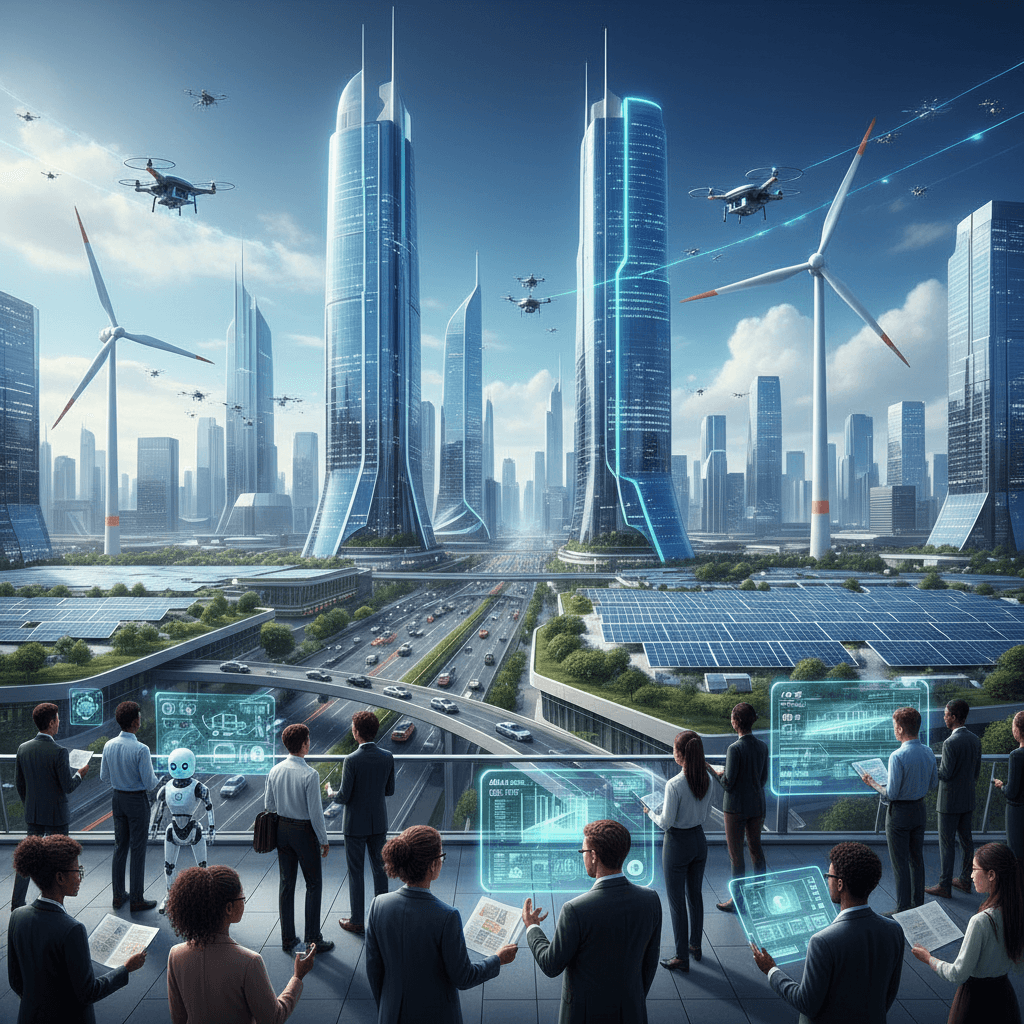
The Technology and AI Supercycle: A New Reality
Growth Stocks to Watch: Capitalizing on the Shifts
Navigating The Great Divide
We are currently operating in a deeply bifurcated market. To understand where we are going, we have to look honestly at where we are. Macroeconomic indicators and geopolitical stability metrics are flashing dark red. The U.S. national debt has just crossed an unfathomable $39 trillion threshold. What a hard ceiling on how much the federal government can stimulate the economy in the event of a severe downturn without triggering a catastrophic wave of inflation.
Yet, despite this looming shadow, the stock market refuses to capitulate. Why? Because technology, semiconductor, and digital infrastructure companies are experiencing a secular bull run unlike anything we have seen since the dawn of the internet. Artificial intelligence is no longer a speculative venture capitalist bet. It is actively generating billions in real-world revenue, drastically reducing corporate operational costs, and single-handedly propping up the major indices.
The Q2/Q3 2026 Forecast
Expect intense, headline-driven volatility in the short term. The VIX (volatility index) will likely remain elevated as markets attempt to price in the ongoing Middle East conflict and shifting U.S. foreign policy.
We anticipate defensive inflows into the aerospace, defense, cybersecurity, and energy sectors over the next 60 days. Investors are seeking safe havens, and traditional commodities like gold, alongside digital commodities like Bitcoin, will catch strong bids.
Meanwhile, mega-cap tech stocks will experience wild price swings but will ultimately continue their upward trajectory. We project a temporary 5% to 7% pullback in the broader S&P 500 as institutional investors digest the shockwaves of global geopolitical events. However, we expect this dip to be violently bought by algorithms and retail investors alike, leading to a fierce rally driven by AI-integrated companies pushing into the third quarter of 2026. The divide between “old economy” stocks and “new economy” tech will widen further. Prepare the portfolio for turbulence, but do not bet against human innovation.
Geopolitical Earthquakes: The Heavy Cost of Conflict
We cannot talk about money without talking about the world we live in. The geopolitical landscape is incredibly heavy right now. The human cost of these conflicts is tragic, and the ripple effects on global supply chains and energy markets are profound. Markets despise uncertainty, and we are currently drowning in it.
The Middle East Reaches a Boiling Point
The situation in the Middle East has escalated dramatically. The U.S. Embassy in Baghdad was subjected to a coordinated attack involving three drones and four rockets. At least one drone breached the complex, sending plumes of black smoke into the sky, while air defenses scrambled to intercept others. This direct threat to American diplomatic personnel has sent shockwaves through Washington and global defense markets.
Simultaneously, the conflict between Israel and Iran has reached a dangerous new phase. Israel confirmed the elimination of Iran’s Security Chief, Ali Larijani, a major architect of their military strategy, alongside Gholamreza Soleimani, the commander of the Basij paramilitary force. The strike in Tehran was precise and devastating.
Iran retaliated with overwhelming force, launching multiple ballistic missiles armed with cluster-warhead munitions directly at Israel. The sheer scale of the attack caused massive power outages in Tel Aviv and, tragically, resulted in civilian casualties. The human toll is heartbreaking, and the risk of a broader regional war has never been higher.
This escalation has fractured political unity in the United States. Joe Kent, a top U.S. counterterrorism official, abruptly resigned in protest. Kent issued a scathing statement claiming that Iran posed no imminent threat to the U.S. and that the escalation was driven entirely by lobbying pressure rather than pure national security interests. This internal dissent highlights the immense complexity and domestic political friction surrounding foreign policy in 2026.
Global Political Shifts and Fracturing Alliances
The unrest is altering global diplomacy by the hour. President Trump has officially delayed his highly anticipated trip to China, citing the immediate need to manage the Iranian conflict. More shockingly, Trump voiced intense frustration with NATO allies. He accused the alliance of making a “foolish mistake” by refusing to support U.S. operations in the Strait of Hormuz. Going a step further, he floated the idea of a unilateral U.S. withdrawal from NATO, bluntly stating, “I don’t need Congress” to make the decision. This rhetoric alone is enough to send European defense markets into a frenzy.
France has stepped in with a cautious offer. President Emmanuel Macron stated that French naval forces are prepared to escort commercial ships through the highly volatile Strait of Hormuz, but only on the condition that the immediate military situation calms down. With 20% of the world’s oil passing through this chokepoint, energy markets are holding their breath.
Across the globe, we are witnessing instances of extreme national distress and isolationism. Argentina has officially announced its withdrawal from the World Health Organization, signaling a hard pivot toward intense nationalism and a rejection of globalist institutions. Meanwhile, Cuba is suffering a devastating, total nationwide electricity blackout. The entire country is paralyzed, creating a dire humanitarian crisis right off the coast of Florida.
Business & Economy: Staggering Debt and Massive Deals
While geopolitics dominate the front pages, the underlying mechanics of the global economy are shifting rapidly. Companies are making bold moves to secure their futures in an increasingly unpredictable world.
The $39 Trillion Elephant in the Room
We must address the fiscal reality of the United States. The national debt hitting $39 trillion is a monumental, generational concern. To put this in perspective, the interest payments on this debt alone are consuming a massive portion of the federal budget. This level of borrowing creates a severe fiscal drag. It limits the government’s ability to invest in domestic infrastructure and severely restricts the Federal Reserve’s flexibility. We are effectively borrowing from our grandchildren to fund present-day operations, and bond markets are beginning to demand higher yields to justify the risk.
Corporate Restructuring and Historic Acquisitions
Despite the macro gloom, corporate America is heavily deploying capital.
Mastercard ($MA): In a massive validation of digital assets, Mastercard is acquiring stablecoin infrastructure firm BVNK for up to $1.8 billion. Traditional payment processors see the writing on the wall. Blockchain-based stablecoins offer instant settlement for fractions of a penny. By absorbing BVNK, Mastercard is ensuring it remains the tollbooth for global commerce, whether transactions happen in fiat or crypto.
Amazon ($AMZN): Amazon continues to defy the laws of physical logistics. The retail giant just rolled out 1-hour and 3-hour delivery options across the United States. They have built an infrastructure moat so deep that competitors simply cannot cross it. For many consumers, ordering from Amazon is now faster than driving to a local store.
Gecko Robotics: The defense sector is modernizing rapidly. Gecko Robotics just secured the largest robotics deal in U.S. Navy history. As military recruitment faces challenges, the Department of Defense is leaning heavily into automation to maintain fleet readiness and perform dangerous maintenance tasks.
SoFi Technologies ($SOFI): Not all news is positive. SoFi is enduring a brutal 2026, with shares plummeting 33% year-to-date. Investors are severely punishing the fintech company amid shifting consumer credit metrics, rising default fears, and a heavily leveraged balance sheet. The market is showing zero mercy for companies that cannot prove robust profitability in this high-rate environment.
A Fundamental Shift in Financial Reporting
The SEC is currently preparing a controversial proposal to eliminate quarterly earnings reports. The plan aims to transition public companies to twice-yearly reporting to reduce corporate administrative burdens and discourage short-term decision-making by executives. If passed, this will fundamentally alter how Wall Street operates. It will significantly reduce the quarter-to-quarter noise but will place extreme, volatile weight on those two annual reporting dates.
The Technology and AI Supercycle: A New Reality
If the geopolitical section of this newsletter filled you with dread, the technology section should fill you with awe. The pace of innovation we are tracking is nothing short of breathtaking. We are living through the installation phase of a new technological epoch.
NVIDIA ($NVDA) Refuses to Slow Down
NVIDIA is operating in a league entirely of its own. They recently unveiled DLSS 5, a major artificial intelligence breakthrough that completely redefines gaming and simulation visuals. But their ambitions stretch far beyond rendering pixels. NVIDIA announced massive partnerships with BYD, Nissan, Hyundai, and Geely to power the brains of self-driving cars globally.
The biggest shockwave came from their partnership with Uber ($UBER). The two tech giants are launching a global Level 4 robotaxi network, beginning in Los Angeles and San Francisco in 2027. This transitions autonomous driving from a novelty into a scalable utility. Furthermore, NVIDIA cemented its dominance in data centers by introducing its first AI supercomputer, seamlessly integrating Groq racks and the highly anticipated Vera Rubin GPUs. They are building the picks, the shovels, and the gold mines of the AI rush.
Apple ($AAPL) Expands the Ecosystem
Apple is aggressively laying the groundwork for WWDC 2026 and the rollout of iOS 27. They are expanding their reach into professional creative markets with the strategic acquisition of MotionVFX and preparing the launch of the AirPods Max 2. Apple’s strategy remains clear: lock users into a seamless, highly integrated hardware and software ecosystem where AI runs locally and securely on the device.
Artificial Intelligence Integrates into Daily Life
Microsoft ($MSFT): The software giant appointed a new Copilot boss following an aggressive restructuring of its AI leadership. Microsoft is clearly focused on pushing its AI assistant deeper into enterprise workflows, making it an indispensable tool for every office worker on the planet.
Google ($GOOGL): Google expanded its Personal Intelligence feature to all users in the U.S. This moves AI from a generalized chatbot to a deeply personalized assistant that understands a user’s specific habits, schedules, and preferences.
Shopify ($SHOP): E-commerce is about to change forever. Shopify is gearing up to deploy sophisticated AI shopping agents. These agents will act on behalf of the consumer—scouring the internet, finding the best products, and even negotiating prices autonomously.
xAI (Elon Musk): Elon Musk is taking his AI venture directly to Wall Street. xAI is aggressively hiring elite financial bankers and credit lenders to train its chatbot, Grok, in high-level investment strategy. The objective is to turn Grok into a professional-grade analytical tool capable of deciphering complex financial instruments like leveraged loans and mortgage-backed securities, directly competing with human analysts.
The Future of Human Labor
We are finally getting real data on how AI will impact jobs. Andrej Karpathy released a brilliant, open-source project mapping AI’s exposure to the U.S. labor market. Scoring 342 occupations, the map reveals a stark reality. Cognitive, screen-based jobs like software developers, paralegals, and data analysts face high exposure to automation (scoring 8 to 10). Conversely, physical labor jobs like roofers and janitors face almost zero exposure (scoring 0 to 1). The national average sits at 5.3 out of 10. The white-collar world is about to experience the kind of automation that blue-collar manufacturing experienced in the 1980s.
The Digital Asset Surge
In response to fiat currency devaluation and geopolitical instability, capital is flooding into digital assets. Bitcoin ($BTC) violently smashed through resistance to hit $75,000, continuing its long-term upward trajectory. Ethereum ($ETH) reclaimed the $2,350 level, surging over 20% in just eight days. Institutional adoption is no longer a theory; it is a mathematical reality playing out on the charts.
Capitalizing on The Shifts
Navigating this environment requires precision. Here are the specific companies positioned to capitalize on these massive macroeconomic and technological shifts.
NVIDIA Corp ($NVDA)
The Thesis: NVIDIA is the absolute backbone of the AI revolution. Their hardware is the foundational layer upon which every other tech company is building. The new Uber robotaxi deal and the deployment of Vera Rubin GPUs ensure their revenue streams remain highly diversified.
Actionable Insight: Maintain a strong hold for long-term investors. Expect volatility, but use any broad market pullbacks caused by geopolitical fear to accumulate shares.
Amazon.com Inc ($AMZN)
The Thesis: The introduction of 1-hour and 3-hour delivery capabilities is a flex of logistical dominance. Amazon has transitioned from an online retailer to an inescapable utility infrastructure. Competitors cannot replicate the billions of dollars Amazon has poured into last-mile logistics over the last decade.
Actionable Insight: Watch for increased retail market share and margin expansion in their upcoming earnings. The efficiency of their delivery network directly translates to bottom-line profitability.
Mastercard Inc ($MA)
The Thesis: The $1.8 billion acquisition of BVNK bridges the gap between traditional credit networks and blockchain infrastructure. Mastercard is actively future-proofing its business model. By integrating stablecoins, they are positioning themselves to capture the next generation of global, cross-border payments.
Actionable Insight: This is a high-quality, dividend-growing compounder that provides stability to a portfolio. It is a core holding for navigating the transition into digital finance.
Uber Technologies Inc ($UBER)
The Thesis: The 2027 Level 4 robotaxi network launch fundamentally alters Uber’s business model. They are transitioning from a labor-intensive, low-margin ride-hailing app into a high-margin, autonomous logistics grid. Removing the human driver from the equation drastically changes the unit economics of the company.
Actionable Insight: Monitor this closely. The capital expenditure required for this rollout will be immense in the short term, but the long-term margin expansion potential is massive.
Shopify Inc ($SHOP)
The Thesis: By empowering independent merchants with AI shopping agents, Shopify ensures it remains the premier anti-Amazon ecosystem. They are democratizing enterprise-level artificial intelligence, allowing small businesses to compete with retail giants.
Actionable Insight: Track the adoption rates of their new AI features by enterprise-level merchants. If Shopify can prove these tools increase conversion rates, the stock has significant upside potential.
Disclaimer: The views and opinions expressed in this newsletter are those of the authors and do not necessarily reflect the official policy or position of Stock Region. All investment strategies and investments involve risk of loss. Nothing contained in this publication should be construed as investment advice. Any reference to an investment’s past or potential performance is not, and should not be construed as, a recommendation or as a guarantee of any specific outcome or profit.