Bridging the gap between uncertainty and the stock market
In the pursuit of success, the journey from theoretical research to tangible solutions is often fraught with challenges.

Written by
Stock Region
Insight
Apr 19, 2026
4 min read
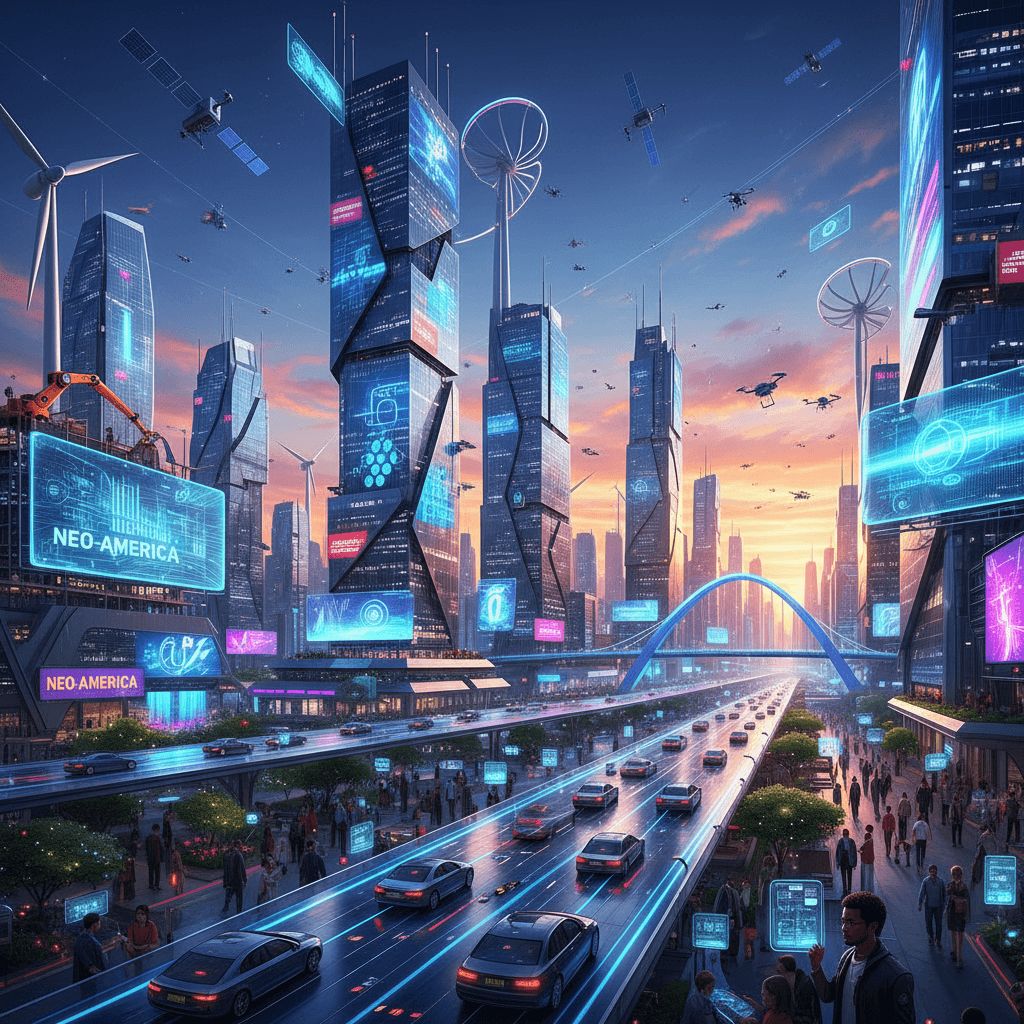
Navigating a Fractured but Thriving Global Market
Disclaimer: The following newsletter is for informational and educational purposes only. It does not constitute financial advice, investment recommendations, or an endorsement of any particular security or strategy. All investments carry risks, including the potential loss of principal. Please conduct your own research or consult a licensed financial advisor before making any investment decisions. Opinions expressed are solely those of the author and do not represent guaranteed outcomes.
You know exactly how erratic, wild, and exhilarating this market feels. We watch history unfold in real time. From the blistering pace of artificial intelligence advancements to the delicate tightrope walk of global diplomacy, the landscape shifts beneath our feet every single day. We are navigating a period that future economists will study for decades.
We want to speak directly to you right now. It feels overwhelming to process the sheer volume of news crashing into our feeds. You might feel anxious watching geopolitical tensions flare up, or perhaps you feel a rush of excitement seeing companies like NVIDIA and Tesla push the boundaries of human achievement. Both reactions make perfect sense. This is a deeply human market, driven entirely by fear, greed, innovation, and pride. We want to cut through the noise, give you our honest opinions, and help you find the opportunities hiding in plain sight.
When you invest your hard-earned capital, you do not just buy a piece of a company. You buy into a vision of the future. The events of this week—ranging from classified Pentagon deals to deep-space satellite deployments—paint a picture of a world moving faster than ever before. You have to stay informed, and you have to stay sharp. Let us explore what is shaping our portfolios and our lives this week.
Stock Market Forecast: Power, AI, and Geopolitics
Our overall market forecast for the remainder of 2026 remains highly bullish, but we are navigating with extreme caution. We sit on a powder keg of geopolitical volatility, yet the stock market continues to find reasons to rally. This resilience stems largely from the unstoppable force of artificial intelligence and massive infrastructure development.
President Donald Trump recently stated that the U.S. leads the world in AI, beating China in both technology and the broader economy. He hit the nail on the head regarding one critical factor: self-sufficient power generation. You cannot build a massive AI infrastructure without electricity. The companies that figure out how to generate, store, and distribute power efficiently will become the true winners of this decade. We see a massive divergence between the companies that understand this energy requirement and those that merely build software.
We expect the S&P 500 to experience sharp, localized corrections based on geopolitical news—specifically surrounding the Middle East—but the underlying corporate earnings, particularly in the tech and energy sectors, provide a massive floor for equities. You should expect a rotation out of stagnant consumer staples and into energy grid infrastructure, defense technology, and specialized semiconductor companies. The market will reward aggression, efficiency, and scale. We also foresee increased volatility in currency markets as shifting alliances challenge the traditional dominance of the US Dollar in specific trade routes, though domestic tech strength keeps American markets highly attractive.
Geopolitical Earthquake: The Middle East Pivot
The situation in the Middle East dominates the geopolitical stage, and frankly, we see a masterclass in high-stakes negotiation playing out.
The Iran Deal and the Strait of Hormuz
The U.S.-Iran ceasefire holds, but the tension remains palpable. Pete Hegseth urged Iran to secure a deal while the Pentagon remains “locked and loaded.” In a massive geopolitical twist, President Trump announced that Iran agreed to hand over its enriched uranium supply, bringing it directly to the United States. Furthermore, the Strait of Hormuz—a critical artery for global oil—is now completely open for business. The U.S. actively helps Iran remove sea mines, though Trump clarified that the naval blockade remains active until the uranium transaction finishes entirely.
When NATO offered to assist in the Strait, Trump bluntly told them to “stay away.” He also took a swing at Italy, stating they were not there for the U.S., signaling deep fractures in European alliances. Meanwhile, the U.S. House of Representatives narrowly rejected a resolution to limit the President’s military authority against Iran by a razor-thin 213-214 vote. We view this as a massive victory for Trump’s “maximum pressure” strategy and a clear signal that the executive branch will maintain its aggressive diplomatic posture.
However, peace talks remain incredibly fragile. Envoys traveled to Islamabad, Pakistan, to finalize terms, but recent reports indicate Iran rejected the second round of talks. The market hates uncertainty, but oil prices stabilized slightly with the Strait reopening. You should keep a close eye on crude oil futures.
Lebanon and Cuba
In an unprecedented move, Trump declared that Israel is “prohibited” from conducting airstrikes in Lebanon. This shocked Prime Minister Benjamin Netanyahu and prompted immediate demands for clarification from the White House. Consequently, Hezbollah agreed to respect the Israel-Lebanon ceasefire terms, provided Israel halts attacks. This delicate balancing act changes the risk profile for defense contractors heavily tied to the region.
Just 90 miles off the Florida coast, the Cuban president declared the country “ready” for a U.S. attack. While we doubt a full-scale conflict will erupt in the Caribbean, this rhetoric adds a layer of anxiety to an already stressed global system. Investors must factor these peripheral tensions into their broader risk models.
The AI Supremacy Race: OpenAI vs. Google vs. Anthropic
The artificial intelligence landscape is evolving into a brutal, three-way street fight. We no longer see a single dominant player; instead, we witness a fragmented war for developer loyalty and enterprise contracts.
The Market Share Shift
ChatGPT’s massive early dominance continues to slip. Over the past year, its share of generative AI traffic plummeted from 77% to 57%. Where did those users go? Google’s Gemini surged to capture 25% of the market, and Anthropic’s Claude tripled its share to 6%. We believe this fragmentation is excellent for the market. Competition breeds better tools, lower prices, and faster innovation.
Google’s Defense Play
Google makes a massive pivot. Reversing its strict 2018 stance on military projects, Google is negotiating a classified deal to deploy Gemini with the Pentagon. They target $2 billion in defense contracts by 2027. We believe this represents a brilliant, albeit controversial, move. Defense contracts offer incredibly sticky, recession-proof revenue. Alphabet also pushes consumer boundaries with DeepMind’s launch of Gemini 3.1 Flash TTS, a text-to-speech model supporting over 70 languages with emotional vocal styles and SynthID watermarking.
Anthropic and Alibaba
Anthropic received a “supply chain risk” label and lost out on Pentagon deals because they refused to loosen their strict safety safeguards. However, they just launched Claude Opus 4.7, designed specifically for long, autonomous workflows and incredible code analysis. They cater heavily to the private sector and developer communities who value precision over broad military applications.
On the other side of the globe, Alibaba open-sourced Qwen3.6. We view this as a massive deal for global developers. It operates as a highly efficient model with 35 billion parameters (only 3 billion active), offering multimodal reasoning that rivals models ten times its size. By open-sourcing this under Apache 2.0, Alibaba aggressively undercuts Western tech moats.
Corporate Power Moves: Tesla, Uber, and Netflix
Tesla’s Hyper-Efficient Future
Tesla operates as an AI and robotics behemoth. The company just completed the tape-out of its AI5 processor. This custom System on a Chip (SoC) runs hyper-efficient, real-time AI inference. Production with TSMC and Samsung starts in 2027, aimed directly at powering next-gen autonomous vehicles, the Cybercab, and the Optimus robot. Furthermore, Tesla officially expanded its Robotaxi service to Dallas and Houston. We feel they move far faster than legacy automakers can comprehend, essentially building a software and logistics empire disguised as an automotive brand.
Uber’s Logistics Push
Uber continues to find clever ways to integrate into our daily lives. They just launched doorstep return pickups. Instead of driving to the post office to return a package, Uber handles it for you. It sounds simple, but this logistics play adds a high-margin revenue stream utilizing their existing driver network. We see this as a direct challenge to traditional courier services and a brilliant way to increase user engagement within the Uber app ecosystem.
Netflix Chases Short-Form
Netflix introduces a vertical video feed, using artificial intelligence to enhance recommendations. They see the writing on the wall: short-form content consumption eats heavily into traditional viewing hours. While some analysts might view this as a desperate move to capture the TikTok audience, we see it as necessary adaptation. Netflix must evolve its user interface to keep younger demographics engaged on their platform.
Robotics, Space, and Defense: The Next Frontier
Unitree Robotics IPO
Keep a very close eye on Unitree Robotics. They filed for a massive $610 million IPO on the Shanghai Stock Exchange, targeting a Q2 2026 completion. They currently sell their R1 humanoid robot on AliExpress for just $8,150—including international shipping and taxes—while maintaining a staggering 60% gross margin. They initiate a brutal price war that Western robotics companies are completely unprepared to fight. This IPO will inject massive capital into their research and development, accelerating their G1 and H1 humanoid series.
NVIDIA’s Creative Leap
NVIDIA refuses to slow down. They unveiled Lyra 2.0, an AI framework that generates persistent, fully explorable 3D environments from a single static image. By solving the complex “temporal drifting” problem, NVIDIA sets a new standard for AI-driven 3D content creation. If you thought they were just a hardware company, you need to think again. They build the software infrastructure for the next generation of digital reality, movie production, and video game development.
SpaceX and Palantir
SpaceX just launched its 1,000th Starlink satellite of 2026. With over 10,000 active satellites, they built the largest satellite network in human history, averaging one launch every 2.5 days. This rapid deployment fundamentally changes global internet access and military communications.
Meanwhile, Palantir released a highly controversial mini-manifesto denouncing corporate inclusivity and what they call “regressive” cultures. Love them or hate them, Palantir knows exactly who they are. They lean hard into a patriotic, mission-driven ethos that resonates deeply with their primary defense sector clients.
The Mystery of Amy Eskridge
We must take a moment to address a deeply unsettling story crossing our desks. Amy Eskridge, a 34-year-old scientist closely linked to UFO research, was found dead under mysterious circumstances. According to reports, her death marks the 11th case of its kind in recent years. While we deal primarily in facts and market data, anomalies like this capture the human imagination and raise serious questions about what exactly happens behind the curtain of classified aerospace research. We will continue to monitor any corporate fallout related to advanced aerospace defense contractors, as these stories occasionally precede massive shifts in public policy or declassification events that impact the defense sector.
Growth Stocks to Watch
This week’s whirlwind of news has prompted us to look beyond the all-too-familiar household names and dig deeper into stocks that are making waves—sometimes under the radar—across the global market. Let’s break down growth stocks we’re actively monitoring, and why we believe their stories are more nuanced, strategic, and compelling than the headlines might suggest.
First, we must talk about Alphabet Inc. (GOOGL), the tech titan whose recent strategic maneuvers have made it much more than a search giant. Google’s aggressive pivot toward defense, particularly its classified negotiations to bring Gemini AI to the Pentagon, is an audacious step back into the military sphere after a very public retreat in 2018. By targeting $2 billion in defense contracts by 2027, Alphabet is betting on a new category of revenue—one that is sticky, recession-resistant, and backed by immense government budgets. This move is not without controversy, as it brings scrutiny over technology’s role in warfare and national security. However, for investors, it signals a willingness to diversify beyond ad revenue and consumer tech, generating multi-year government deal flow and putting Alphabet in a league with high-profile defense contractors. The combination of deep AI research, cloud infrastructure, and now a foothold in the defense sector gives Alphabet asymmetric upside as these worlds continue to intersect.
Tesla Inc. (TSLA) deserves its place on every sophisticated investor’s radar, but not for the reasons most might think. The tape-out of Tesla’s AI5 processor marks the company’s definitive shift from being perceived as an automaker to a full-stack AI and robotics innovator. With chip design now under their roof and volume production partnerships in place with TSMC and Samsung, Tesla controls the entirety of its hardware and software destiny. This vertical integration sets up Tesla not just to roll out robotaxis or expand into mobility-as-a-service models in Dallas, Houston, and beyond, but to tackle global, logistics, and even consumer robotics industries that legacy OEMs have barely scratched. Tesla’s ability to anticipate, adapt, and use in-house technology to leapfrog competitors increases its market share and deepens its competitive moat, making it much more resilient in the face of economic or regulatory shocks.
When talking about NVIDIA Corporation (NVDA), one cannot ignore the profound transition the company is making from hardware champion to essential AI software provider. Lyra 2.0, NVIDIA’s latest leap, allows for the effortless generation of intricate, persistent 3D environments—a feature with clear applications in gaming, virtual reality, cinematic production, and even industrial design. But beyond the flashy surface, NVIDIA is weaving its technology into the very fabric of AI research, education, and deployment. The implications are legion: game studios and VR startups suddenly have the backbone to build at scale, but so do medical device designers, smart city planners, and advanced academic institutions. As enterprise adoption accelerates, software revenues—traditionally overshadowed by chips and GPUs—are poised for exponential growth, reinforcing NVIDIA’s role as a backbone for multiple future-facing industries.
Palantir Technologies (PLTR) might elicit strong opinions, but its presence in high-security intelligence and defense is now more pronounced than ever. While the company’s recent mini-manifesto sparked debate within Wall Street and Silicon Valley alike, it underscores an unflinching loyalty to the national security market, something that has become even more critical as global risks rise. The clear alignment with government clients, data sovereignty concerns, and the increased need for real-time battlefield intelligence keep Palantir’s software front and center for Western governments. As more threats—including cyber, infrastructure defense, and hybrid warfare—emerge, Palantir is positioning itself as the mission-critical nervous system, capable of adapting to new forms of state and non-state aggression. Its contracts may at times be controversial, but its growth trajectory is now tightly coupled to the defense and security needs that big tech sometimes shies away from.
Next on our list is Alibaba Group (BABA), which is shaking up the global AI scene from the East. By open-sourcing its Qwen3.6 multimodal AI model under the Apache 2.0 license, Alibaba is making a strategic play to empower developers and researchers worldwide. The model’s efficiency—35 billion parameters with only 3 billion active—levels the playing field, allowing smaller enterprises and innovation hubs in emerging markets to compete with Western AI titans. Longer-term, this democratization of AI development puts pressure on closed systems and creates an ecosystem where Alibaba’s cloud and infrastructure offerings become indispensable. At a time when US-China tensions threaten platform fragmentation, Alibaba’s open-source move is both a technological and a political statement, potentially accelerating global adoption outside of the American tech stack.
Stepping away from traditional tech and into logistics innovation, Uber Technologies Inc. (UBER) continues to disrupt beyond ride-hailing. The rollout of doorstep return pickups demonstrates Uber’s holistic vision for the future of local commerce: seamless, customer-oriented, and tech-enabled at every touchpoint. As consumers increasingly optimize for convenience, Uber’s ever-expanding “infrastructure of movement” positions it as an essential bridge between physical and digital commerce. By further embedding itself into e-commerce return cycles—an area often fraught with frustration—Uber boosts its network usage, increases its relevance to merchants, and brings in new sources of revenue with far higher margins than its core business.
The essential yet often overlooked backbone of the AI revolution is power. Enter NextEra Energy (NEE). With the exponential growth of hyperscale data centers and AI workloads comes an urgent need for reliable, scalable, and clean electricity. NextEra sits at the vanguard, rolling out renewable infrastructure, modernizing power grids, and developing storage solutions that directly support America’s digital ambitions. Unlike the flashier names on this list, NextEra provides the stability and scalability without which the entire tech ecosystem could falter. As energy independence and sustainability become top-of-mind for corporations and governments, NextEra’s growth prospects become ever more robust.
Netflix Inc. (NFLX) finds itself at a crossroads, and its adaptation to the vertical video era is a fascinating pivot that blends predictive analytics, machine learning, and classical entertainment. No longer able to rely purely on long-form series or blockbuster films, Netflix’s embrace of short, immersive formats keeps it relevant among younger audiences who fluctuate between social apps and digital content. If Netflix succeeds in converting even a minority of its user base to engage deeply with this new format, it won’t only defend its subscription model—it will create entirely new revenue streams, encourage addictive user habits, and stay leagues ahead of legacy studios struggling to innovate.
We would be remiss not to touch on Lockheed Martin (LMT). In a world experiencing both hidden and overt military escalations, defense contractors like Lockheed have seen a resurgence in importance. The company’s robust contracts, especially in fields like aerospace, missile defense, and naval systems, offer both predictable cash flows and critical technological leadership. Lockheed’s role in executing “maximum pressure” strategies around the globe makes it a long-term stabilizer in any growth-oriented yet risk-conscious portfolio. Investors seeking diversification from pure tech should not ignore these strategic arms suppliers.
Finally, no list is complete without an eye on the supply chain core: Taiwan Semiconductor Manufacturing Co. (TSMC). As the linchpin in global chip production, TSMC underpins nearly every innovation profiled in this newsletter—be it Tesla’s AI5 chips, NVIDIA’s latest GPUs, or even chips for autonomous drones. Their unique technical prowess and scale mean that, despite geopolitical headwinds, their fabs remain the uncontested heart of the global semiconductor supply chain. For investors with a long arc, TSMC represents both a growth opportunity and an insurance policy for the world’s new digital infrastructure.
These names are guideposts for a market that is shifting, accelerating, and colliding in unpredictable ways. Each has a clear story, a defined strategy, and a set of opportunities or risks that require true analysis—because in this market, conviction and clarity are your edge.
1. Alphabet Inc. (Ticker: GOOGL)
Google aggressively pursues defense contracts, targeting $2 billion by 2027 with Gemini. Their willingness to pivot and embrace military applications opens up a massive, highly reliable revenue stream that competitors refuse to touch. We see strong upside potential as they lock in multi-year government deals.
2. Tesla Inc. (Ticker: TSLA)
The AI5 processor tape-out proves Tesla fully vertically integrates its hardware. Launching the Robotaxi service in major Texas markets transitions them from an automaker to a high-margin software and transport-as-a-service company. Their control over the entire supply chain, from chip design to vehicle production, gives them an unassailable moat.
3. NVIDIA Corporation (Ticker: NVDA)
Lyra 2.0 cements NVIDIA’s lead in AI software, not just hardware. They solve complex generative video and 3D environment problems, making them indispensable for gaming, film, and virtual reality industries. We expect their software revenue to grow exponentially over the next three years.
4. Palantir Technologies (Ticker: PLTR)
Palantir’s unapologetic stance on corporate culture aligns perfectly with the current administration’s defense-first posture. As geopolitical tensions rise across the Middle East and Asia, PLTR software becomes absolutely mission-critical for Western governments to track and analyze threats in real-time.
5. Alibaba Group (Ticker: BABA)
Open-sourcing a highly efficient multimodal AI model (Qwen3.6) represents a massive threat to closed-system Western tech. At its current valuation, BABA represents a significant value play with massive upside if their AI adoption scales globally among independent developers.
6. Uber Technologies Inc. (Ticker: UBER)
The logistics expansion into doorstep returns shows Uber’s ambition to dominate local delivery. By leveraging their massive driver base to solve consumer pain points, they increase daily active users and push deeper into e-commerce fulfillment.
7. NextEra Energy (Ticker: NEE)
As President Trump pointed out, AI requires massive power. NextEra Energy stands at the forefront of grid infrastructure and renewable energy deployment. You cannot run hyperscale data centers without reliable power, making utility providers like NEE silent winners in the AI boom.
8. Netflix Inc. (Ticker: NFLX)
Adapting to the vertical video format demonstrates Netflix’s agility. They possess the best data analytics in the entertainment business. If they successfully capture short-form engagement, they protect their subscriber base from social media erosion and maintain pricing power.
9. Lockheed Martin (Ticker: LMT)
With tensions high in Cuba, the Middle East, and ongoing shifts in NATO dynamics, traditional defense contractors remain essential. LMT provides the hardware backing the “maximum pressure” campaigns. They offer stability, strong dividends, and consistent government contract flow.
10. Taiwan Semiconductor Manufacturing Co. (Ticker: TSM)
Tesla relies on TSMC for its new AI5 processor. Almost every major AI advancement traces back to TSMC’s foundries. Despite geopolitical risks, they remain the undisputed king of semiconductor manufacturing, making them a cornerstone for any tech-focused portfolio.
We live through a period of immense friction. We see friction between nations, friction between technological boundaries, and friction between corporate ideologies. But remember this core truth: friction creates heat, and heat creates energy. The markets thrive on this exact kind of energy.
Do not let the scary headlines paralyze your decision-making. The integration of artificial intelligence into national defense, the rapid deployment of autonomous robotics, and the massive restructuring of global energy supply chains represent the greatest wealth-creation mechanisms of our time. You must stay focused, do your homework, and never bet against human innovation. The opportunities are massive for those willing to look past the short-term noise.
We will see you in the next briefing. Stay sharp.
Disclaimer: The information provided in this newsletter is for educational and informational purposes only. It is not intended to be a substitute for professional financial advice. Always consult with a qualified financial expert before making investment decisions. The author and Stock Region may hold positions in the stocks mentioned. Past performance is not indicative of future results. Market conditions can change rapidly, and all investments involve risk.